
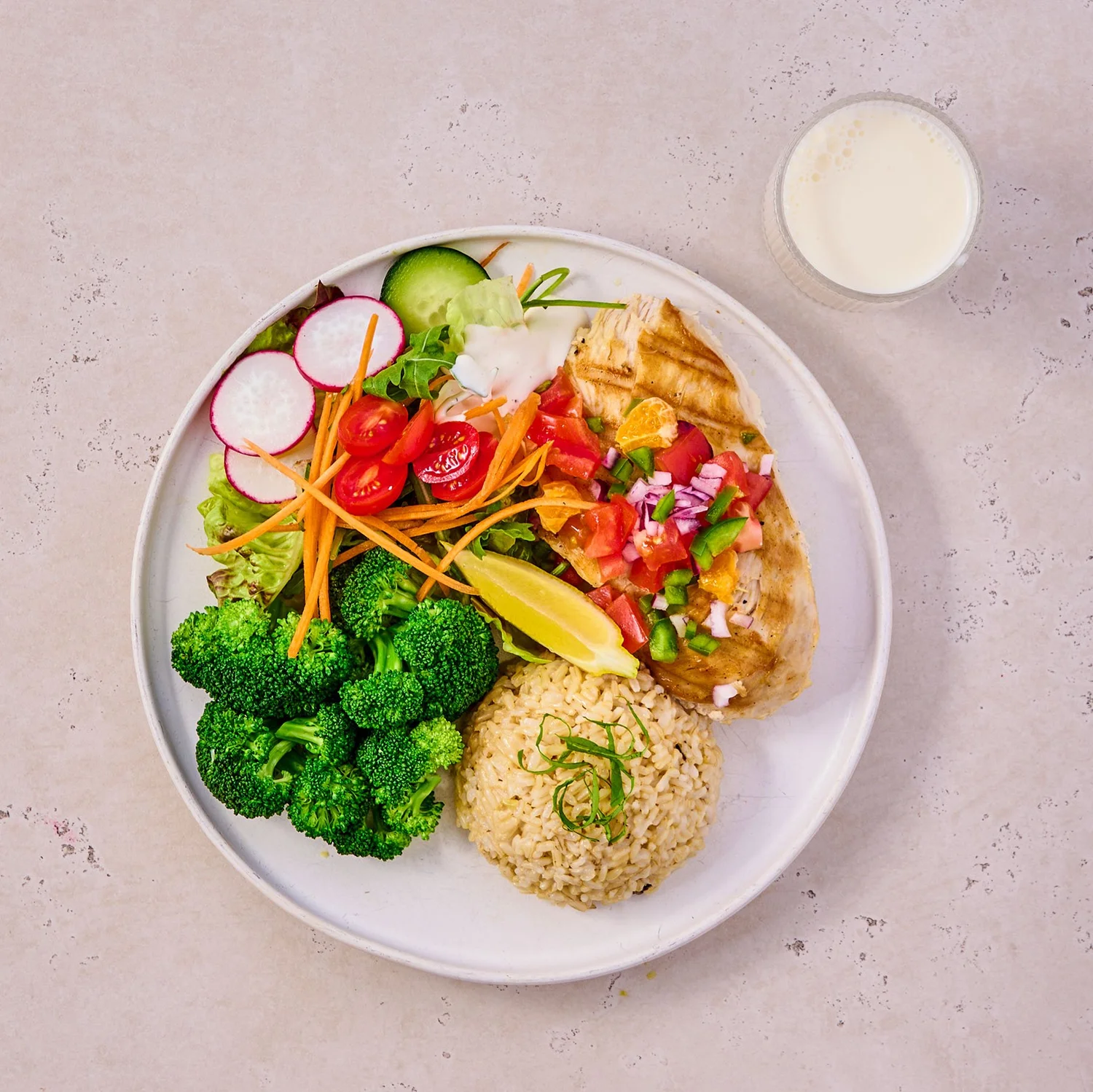
Most people focus on the operation itself. But the weeks before surgery shape how well your body can heal after it. Every incision and every inch of repaired tissue has to be rebuilt by your own cells, and those cells run on protein, calories, vitamins and minerals.1,2
This guide walks through the science of wound healing, why surgeons pay close attention to a blood protein called albumin, and which nutrients have real evidence behind them. You'll also see where popular supplements like collagen and biotin actually fit.
How products are selected: each product fits a category that is commonly recommended around surgery. Some links below are affiliate links. As an Amazon Associate, Recovery Blueprint MD earns from qualifying purchases, at no extra cost to you. This article is education, not medical advice. Check every supplement with your surgical team before you start it.
The short version
✓ Wounds heal in four overlapping phases, and protein is needed in every one of them.
✓ Low albumin before surgery is one of the strongest lab predictors of complications, though it reflects overall health, not just protein intake.
✓ Protein targets of roughly 1.2–1.5 g per kg of body weight a day are commonly used around surgery. Confirm yours with your team.
✓ Iron matters if you're low. Anemia before surgery is linked to more complications, so get tested before you supplement.
✓ Vitamin C and zinc support collagen building. Collagen and biotin have limited evidence for surgical wound healing.
✓ Fiber keeps you regular, especially once pain medication and iron slow things down.
01
The science
How your body heals a surgical wound
Wound healing isn't a single event. It is a carefully timed sequence of four overlapping phases: hemostasis, inflammation, proliferation and remodeling.1 Each phase relies on different cells, and each has its own nutritional demands.
The most nutrient-hungry stage is proliferation, when cells called fibroblasts build new collagen and fresh blood vessels grow into the wound. Collagen is itself a protein, and making it depends on vitamin C, zinc and iron. When any of these run short, rebuilding slows down.1,2
Figure 1
The four phases of wound healing
Minutes to hours
1. Hemostasis
Platelets form a clot to stop bleeding and release growth factors that kick-start repair.
Needs: hydration and steady overall nutrition
Days 1–4
2. Inflammation
Immune cells move in to clear bacteria and damaged tissue from the wound.
Needs: protein, zinc, vitamin A
Days 4–21
3. Proliferation
Fibroblasts lay down new collagen and new blood vessels grow into the area.
Needs: protein, vitamin C, iron, zinc
3 weeks to 1+ year
4. Remodeling
Collagen is reorganized and strengthened as the scar matures and flattens.
Needs: protein, vitamin C
Adapted from Guo & DiPietro, 2010.1 The phases overlap, and exact timing varies by person and procedure.
02
Albumin
Albumin: the lab value surgeons watch
Albumin is the most abundant protein in your blood. It's made by the liver, helps hold fluid inside your blood vessels, and carries hormones, medications and nutrients around the body. It is often included in routine blood work before larger operations.
Figure 2
Where albumin levels fall
Below 3.0 g/dL
Low
3.0–3.4
Borderline
3.5–5.0 g/dL
Typical range
A typical adult reference range is about 3.5–5.0 g/dL, though exact ranges vary by lab. Your surgical team interprets your own results.
Low albumin, called hypoalbuminemia, is one of the strongest lab predictors of a difficult recovery. In a landmark study of more than 54,000 surgical patients in the U.S. Veterans Affairs system, complication and death rates rose steadily as albumin fell (Figure 3).3 Plastic surgery research shows the same pattern, with lower preoperative albumin linked to more wound infections, bleeding and other complications.4,5
Figure 3
Albumin and surgical risk
Data: Gibbs et al., Arch Surg 1999, 54,215 patients having major non-cardiac surgery.3 These are the two extremes; risk rose steadily in between as albumin fell.
Here's the nuance that often gets lost: albumin isn't a pure measure of how much protein you eat. Inflammation, illness, liver function and hydration all lower it, and it has a half-life of about three weeks, so it changes slowly.6 Think of low albumin as a warning sign that the body is under strain, and good nutrition as one part of that picture you can actually control.
Why you can't fix it overnight
Because albumin takes weeks to change, the time to focus on nutrition is 4–6 weeks before surgery, not the night before. If your pre-op labs show low albumin, ask your surgeon whether a dietitian referral makes sense.
03
Protein
Protein: the raw material for repair
Every phase of healing runs on protein. Your body uses the amino acids in protein to build collagen, make immune cells, and produce the enzymes and growth factors that coordinate repair.1,2 When intake falls short, the body starts breaking down its own muscle to cover the gap, which is exactly what you don't want going into recovery.
Surgical nutrition guidelines commonly use about 1.2–1.5 g of protein per kilogram of body weight per day around the time of surgery, well above the general-population minimum of 0.8 g/kg.7 Your surgeon or dietitian may set a different target, especially if you have kidney disease.
How it works
From protein to new skin
1
ProteinYou eat it. Shakes, eggs, chicken, fish.
→
2
Amino acidsYour body breaks protein into tiny building blocks.
→
3
CollagenBlocks link into strong ropes. Vitamin C ties the knots.
→
4
New skinCollagen ropes knit your cut closed and make it strong.
About 1/3of your body's protein is collagen
9amino acids you must get from food
3 of 4healing steps need protein
Collagen is the main protein in a healing scar. Your body builds it from the amino acids in the protein you eat.
Figure 4
Daily protein targets at 1.2–1.5 g/kg
Estimates only. To find yours, divide your weight in pounds by 2.2, then multiply by 1.2 and by 1.5. For scale: a chicken breast has about 30 g of protein, a cup of Greek yogurt about 20 g, and most ready-to-drink shakes 20–30 g.
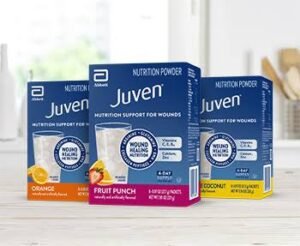
Reaching 100 g or more a day from food alone is hard for many people, especially when appetite drops before or after surgery. Ready-to-drink protein shakes are an easy way to close the gap: one between meals can add 20–30 g with almost no effort. Start them a few weeks before surgery so you know which ones you like. Some people also add Juven, a drink mix made for wound-healing support with the amino acids arginine and glutamine, plus HMB, vitamin C and zinc. It isn't a replacement for your protein shakes, so ask your surgeon before you add it.
Easy daily protein
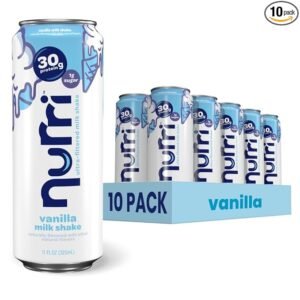
Nutri protein shake, vanilla
A mild, easy-to-sip shake to keep in the fridge before and after surgery.
View on Amazon →
Milk-based
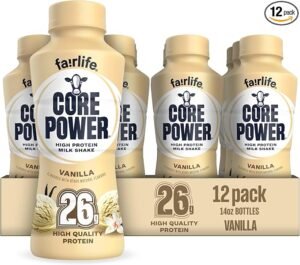
Core Power protein shake, vanilla
A milk-based shake that's easy to keep cold and grab between meals.
View on Amazon →
Dairy-free
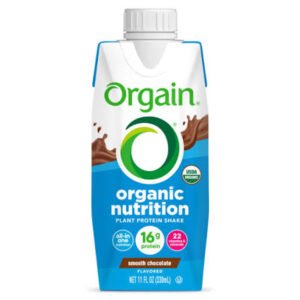
Orgain vegan protein shake
A plant-based option for anyone avoiding dairy.
View on Amazon →
Widely available
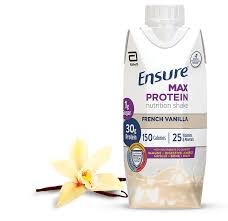
Ensure Max protein shake
A high-protein shake you'll find almost anywhere, handy for the first days at home.
View on Amazon →
Healing support
Juven nutrition drink mix
A drink mix made for wound-healing support, with arginine, glutamine, HMB, vitamin C and zinc. Ask your surgeon before you add it.
View on Amazon →
Pre-op nutrition kit
Want all the protein picks in one place?
See every recommended shake, plus fiber, supplements and prep essentials, in the Recommended Shop.
04
Iron
Iron and anemia: oxygen for healing tissue
Healing tissue needs a steady supply of oxygen, and oxygen is carried by hemoglobin in red blood cells, which depends on iron. Iron is also used by the enzymes that link collagen fibers into strong, stable scar tissue.2
Anemia before surgery is common, and it matters. In a study of nearly 230,000 surgical patients, even mild preoperative anemia was linked to more complications and deaths within 30 days.8 International consensus guidelines now recommend checking for anemia and iron deficiency before major surgery, and treating it when it's found.9
Test, don't guess
Only take iron if blood work shows you need it. Ask your surgeon to check your hemoglobin and ferritin a few weeks before surgery. Iron tablets can also cause constipation, one more reason to keep fiber in your routine.
05
Vitamins & minerals
Vitamin C, zinc and vitamin A
Vitamin C is essential for collagen. The enzymes that cross-link collagen fibers can't work without it, which is why severe deficiency (scurvy) causes old wounds to reopen. Your body stores very little, so steady daily intake from fruit and vegetables, or a supplement if your diet is limited, matters.1,2
Zinc supports immune function and the cell division that rebuilds tissue. A deficiency slows healing, but extra zinc beyond what you need hasn't been shown to speed it up, and long-term high doses can cause copper deficiency.2
Vitamin A supports the inflammatory phase and collagen production, and surgeons sometimes use it in specific situations, such as patients on long-term steroids. High doses can be harmful, so this is one to take only on medical advice.1,2
For most people, a balanced diet or a standard daily multivitamin covers these basics. Megadoses are not better. If your surgeon wants you to have extra healing support, Juven combines vitamin C and zinc with healing amino acids in one drink mix.

Daily multivitamin
OLLY Women's Multivitamin
An easy daily gummy to cover the everyday basics if your diet is limited in the weeks before surgery.
View on Amazon →
Daily multivitamin
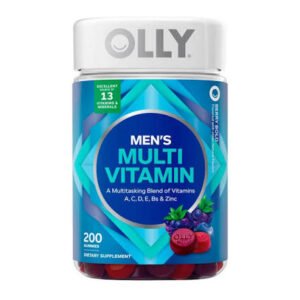
OLLY Men's Multivitamin
The men's version of the same daily gummy, for covering everyday vitamin and mineral basics.
View on Amazon →
If your intake is low
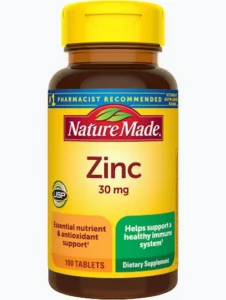
Nature Made Zinc
A single-nutrient zinc supplement. Worth discussing with your team if your diet is low in zinc. More isn't better long term.
View on Amazon →
06
Collagen & biotin
Collagen and biotin: what the evidence really says
Collagen supplements are hugely popular, and it's easy to see why: collagen is the main structural protein in skin and scar tissue. When you swallow collagen, though, it's digested into amino acids and small peptides like any other protein. Some trials show oral collagen peptides can improve skin elasticity and hydration,10 but good evidence that they improve surgical wound healing is still limited.
Collagen can still be a convenient way to add protein. Just remember it's an incomplete protein (it lacks the amino acid tryptophan), so it shouldn't replace complete protein from food or shakes.
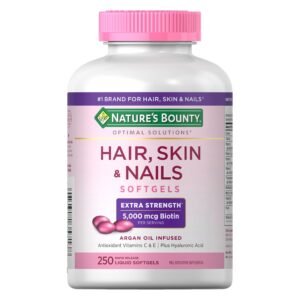
Biotin (vitamin B7) is best known for hair and nails. True biotin deficiency is rare, and there's no good evidence that extra biotin speeds wound healing. There is, however, one important safety issue to know about.
Tell your team if you take biotin
High-dose biotin, common in hair, skin and nail supplements, can interfere with some blood tests and cause falsely high or low results.11 Many teams ask patients to stop it several days before lab work. Check with yours.
07
Fiber
Fiber: the unglamorous essential
Fiber doesn't heal wounds directly, but it protects your recovery. Anesthesia, opioid pain medication, iron tablets, less walking and less water all slow the bowels.12 Constipation after surgery adds pain, bloating and nausea, and straining is uncomfortable on a fresh incision.
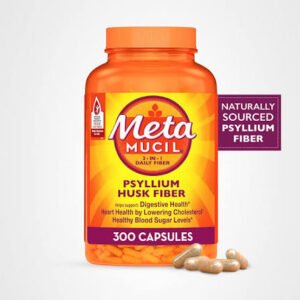
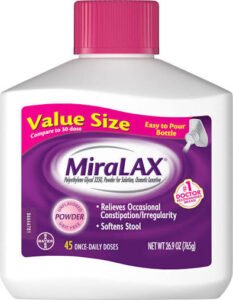
Starting a daily fiber supplement 1–2 weeks before surgery helps your gut settle into a routine before recovery begins. Pair it with plenty of water, since fiber without enough fluid can make things worse. Among fiber types, psyllium has the strongest evidence for relieving constipation.13 Many surgeons also add a gentle laxative while you're taking opioids.
Strongest evidence
Psyllium fiber supplement
Psyllium husk, the fiber with the best evidence for constipation. Mix with a full glass of water once or twice a day.
View on Amazon →

Easy to take
Fiber gummies
A chewable option for anyone who finds powders hard to take. Pair with plenty of water.
View on Amazon →
Gentle laxative
Osmotic laxative powder
Draws water into the stool. Often recommended while taking opioids, when your surgeon approves.
View on Amazon →
08
At a glance
The evidence at a glance
Figure 5
How strong is the evidence for each nutrient?
Protein, at 1.2–1.5 g/kg a day
Strong
Iron, if you're anemic or iron-deficient
Strong
Fiber, for preventing constipation
Strong
Vitamin C, if intake is low
Moderate
Zinc, if deficient
Moderate
Vitamin A
Specific cases
Collagen peptides
Limited
Biotin
No evidence
Summary of the references below. “Strong” means consistent human evidence that it matters for surgical recovery. It doesn't mean more is better.
09
Your plan
A simple pre-op nutrition timeline
4–6 weeks before
Ask about pre-op labs such as albumin, hemoglobin and ferritin. Start working toward your daily protein target.
2–4 weeks before
Add protein shakes between meals if food alone falls short. Start a daily multivitamin if your diet is limited and your team agrees.
1–2 weeks before
Start fiber with plenty of water, and keep up your protein and daily multivitamin routine.
The day before
Follow your fasting instructions exactly. Stock the fridge with shakes for your first days at home.
After surgery
Restart protein and fiber as soon as your team allows, and keep going until you're fully healed.
Reviewed by the Recovery Blueprint MD team. Last updated September 2026.
This guide is general education, not medical advice. Every patient and procedure is different, and your surgeon's own instructions should always take priority. Having a specific surgery? See the recovery must-haves for tummy tuck, BBL, liposuction, breast surgery and facial surgery, or the full pre-op checklist.
Next: which supplements to ask about stopping before surgery →