
Free guide · Mommy makeover
It's your turn.
You grew them, fed them and carried them on one hip while you cooked dinner. Your body changed along the way: looser skin, a softer middle that crunches won't fix, and breasts that sit lower than they used to.
Wanting some of that back isn't vanity. This free guide is the heads-up a well-informed friend would give you: what to plan, what to buy and exactly when you'll use it.
"Do it for you. Then let yourself heal."
Free to read, always. Every product below fits a category commonly recommended after a tummy tuck or breast lift. Some links are affiliate links. As an Amazon Associate, Recovery Blueprint MD earns from qualifying purchases, at no extra cost to you. This article is education, not medical advice. Your surgeon's instructions always come first.
The short version
✓ What it is: usually a tummy tuck plus a breast lift, with or without implants, in one surgery.1,2
✓ Your kit, in order: protein and a steady weight first, then a wedge pillow, binder, surgical bra, stockings and dressings for the first weeks, and silicone for your scars later. Get the whole kit in one click ↓
✓ Recovery: plan on about two weeks off work and no lifting your kids for four to six weeks. Line up help now.5
✓ Your surgeon matters most: choose a board-certified plastic surgeon, and know what's normal and when to call (Good to know ↓).6
One click · Free guide
The Mommy Makeover Recovery Kit
21 essentials: Orgain Vegan Protein Shake · Weekly pill organizer · Medication and supplement log · Extra pillows and wedge support · Large reusable water bottle · Sterile dressing kit · ABD medical pads · Surgical tape · Lipo foam pads · Surgical bra · JP drain holder · Compression stockings · Adjustable abdominal binder · Silicone scar sheets · Silicone scar gel · Sunscreen · Vaseline · Grabber Reacher Tool · Miralax laxative powder · Olly Women's Multivitamin · Nature Made Zinc
Add the whole kit to your Amazon cart →Check with your surgeon first. Some surgeons supply the binder or bra, so remove anything you're given from your cart.
01
Your recovery kit
Your recovery kit, step by step
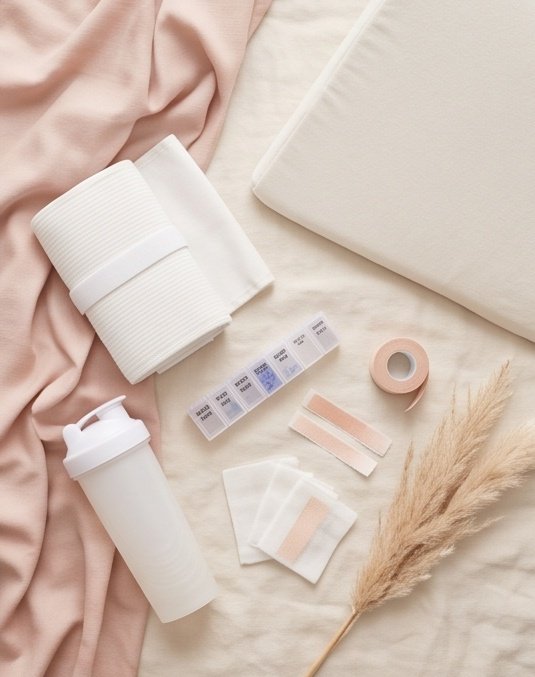
Your surgical team handles the operation. Everything around it is yours to plan, and a little planning makes recovery feel a lot less chaotic. Here's what to do and buy, in the order you'll need it. Most of it is in the one-click kit above.
3–6 months before: get to a weight you can keep
"Stable weight first. Then surgery."
A mommy makeover is body contouring, not weight loss. It removes loose skin and reshapes you, but it can't remove the fat deep inside your belly. You'll love your result longer if you're at a weight you can comfortably hold. Many surgeons like to see about 3–6 months of stable weight. In one body-contouring study, people who had held a stable weight for at least three months had fewer complications.16 That study was in patients after weight-loss surgery, so treat it as a good rule of thumb, not a law.
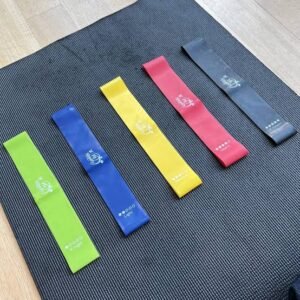
Move in a way you'll actually keep doing. Two or three strength sessions a week plus walks is a great start, and you don't need a gym. Light resistance bands and a mat cover it at home. This is a habit you build before surgery, not something for the early recovery weeks.
Build the habit
Light resistance bands
Strength work at home.
View on Amazon →
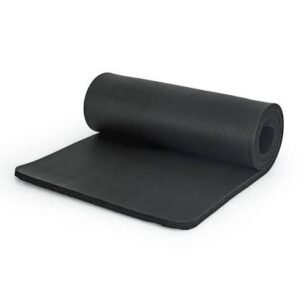
Home workouts
Exercise and stretching mat
A cushioned spot for home workouts.
View on Amazon →
On a GLP-1 like semaglutide or tirzepatide? These drugs can help with weight loss, but they commonly cause nausea and constipation.17 They also slow down how fast your stomach empties. Losing fast isn't the goal. A steady pace, often around 1–2 lb a week, is worth discussing with your prescriber. Keep your protein up and keep lifting, and tell your prescriber if you're barely eating, vomiting or getting weaker. Then tell your anesthesia team about every dose well before surgery, because a slow-emptying stomach matters under anesthesia.
4 weeks before: make protein the easy part
Healing a tummy tuck and a breast lift at the same time takes a lot of building material. Protein, calories, zinc and vitamins all play a part in wound repair.10 In a 2026 controlled study of tummy tuck patients, those given early protein supplements healed better and had fewer wound complications.18 A good target to discuss with your surgeon is about 0.55–0.68 g of protein per pound a day (1.2–1.5 g/kg). It's different if you have kidney disease, and your surgeon may use an adjusted weight.
Protein planner
About how much protein you need per day, by weight
120 lb
65–80 g
140 lb
75–95 g
160 lb
85–110 g
180 lb
100–125 g
200 lb
110–135 g
220 lb
120–150 g
Based on 1.2–1.5 g per kg a day. Planning estimates for healthy adults, not a medical order. Your surgeon or dietitian may use a different target.
Food counts. But when your appetite is off, a ready-to-drink shake gets you 20–30 g without cooking. Orgain is dairy-free. If you like dairy, try the Nutri shake in vanilla or chocolate, Core Power, Quest or Ensure Max. Some people also add Juven, a drink mix made for wound-healing support with arginine, glutamine, HMB, vitamin C and zinc. It isn't a replacement for protein shakes, so ask your surgeon. A women's multivitamin and zinc can cover gaps in your diet. Bring every supplement to your pre-op visit and take only what your surgeon approves. See the nutrition guide and supplements to stop before surgery.
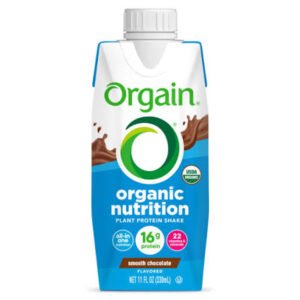
Protein
Orgain vegan protein shake
Ready to drink and dairy-free.
View on Amazon →
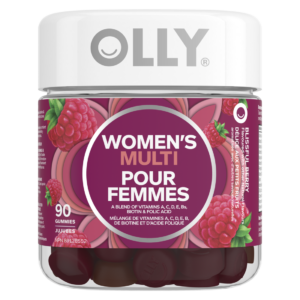
Ask your surgeon
Olly women's multivitamin
Fills gaps while you heal.
View on Amazon →

Ask your surgeon
Nature Made zinc
Supports wound repair.
View on Amazon →
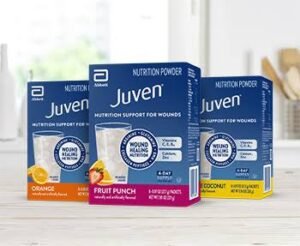
Ask your surgeon
Juven nutrition drink mix
A wound-healing drink mix.
View on Amazon →
Line up your people now. Who covers childcare, meals, rides and anything heavy? A backup adult may be the most valuable thing on this whole list. See your village.
1 week before: build your recovery corner
"Bent at the waist for now. Tall and strong later."

Picture the first night home. You're tired, everything feels tight, and the last thing you want is to dig through drawers. Set it all out now: easy clothes, a long phone charger, snacks, your medicines and a log. Then stay bent. Right after a tummy tuck your skin is pulled snug and the muscle repair is fresh, so most surgeons want you slightly bent at the waist for the first week or two, with your back raised and your knees bent. You'll straighten up a little more each day as your surgeon allows. A wedge pillow behind your back and a pillow under your knees hold that gentle bend all night, so you don't slide flat at 3 a.m., and sitting up keeps pressure off your new breasts. A grabber tool saves you from bending, twisting and reaching for the dropped phone or the sock on the floor.

Must-have
Wedge pillow and extra pillows
Holds the bend all night.
View on Amazon →
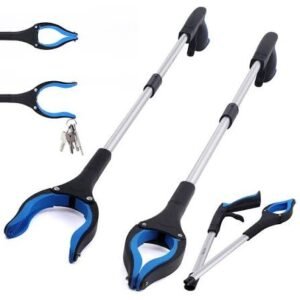
No bending
Grabber reacher tool
No bending or reaching.
View on Amazon →
Pills, on a schedule. You'll come home with pain medicine, maybe antibiotics, a stool softener and drain readings. A weekly organizer and a written log keep it straight when you're foggy.
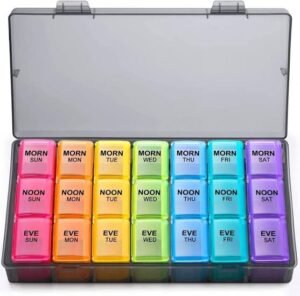
Medication schedule
Weekly pill organizer
Every dose on schedule.
View on Amazon →

Track it
Medication and supplement log
Doses and drain numbers.
View on Amazon →
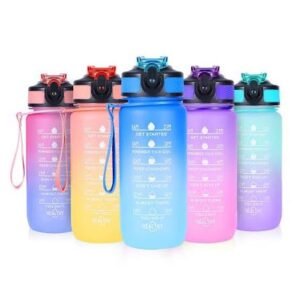
A hydration station. It's much easier to keep sipping when a big bottle is already full and within reach. Electrolyte packets like Liquid I.V. or Nuun, or Ultima powder, make water easier to drink. Follow your team's limits if you're on a fluid, salt or sugar restriction.
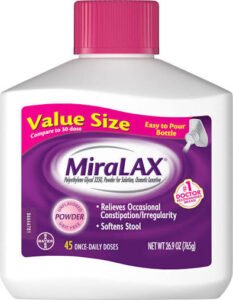
Start your stool softener before surgery. Pain medicine, anesthesia and lying around all slow your bowels down, and opioids are a well-known cause of constipation.14 Straining is the last thing a fresh muscle repair needs, and bloating hurts after belly surgery. Many surgeons suggest starting Miralax a few days before and keeping it up as long as you take opioids. Prefer fiber? Try Metamucil or Benefiber gummies. Drink plenty of water either way.
Dressing and drain supplies. You'll go home with dressings on your incisions12 and often one or two thin drains near your belly incision. They're removed at a follow-up visit once the fluid slows.5 A drain holder clips the bulbs to your clothes so they don't tug when you shower or walk. Write down the drain output every time you empty it, because your surgeon uses those numbers to decide when the drains come out. Stock a sterile dressing kit, gauze squares, thick ABD pads to catch leaks around the drains, and gentle surgical tape that won't pull on fragile skin. You'll find them all on one shelf in the Infirmary.
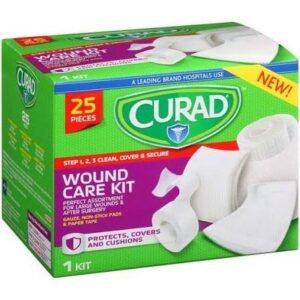
Dressings
Sterile dressing kit
Everything for dressing changes.
View on Amazon →
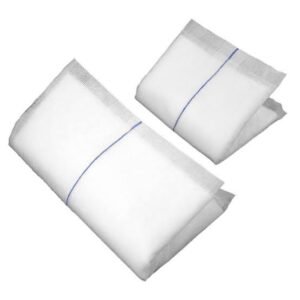
Drains
ABD medical pads
Absorbs leaks around drains.
View on Amazon →
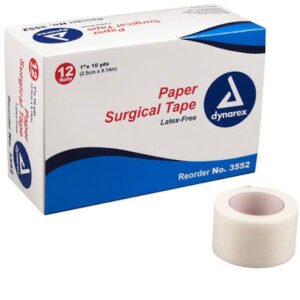
Dressings
Surgical tape
Gentle on fragile skin.
View on Amazon →
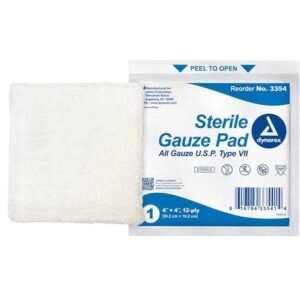
Dressings
Sterile gauze pads
Clean squares for dressings.
View on Amazon →
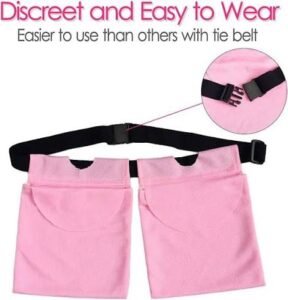
Drains
JP drain holder
Stops drain bulbs from tugging.
View on Amazon →
Compression: what you'll wear all day
"Supportive, never painfully tight."
Most surgeons send you home with a basic binder and bra. They do the job, but the fabric can feel stiff, the edges can roll and the fit is hard to adjust. A well-chosen upgrade can make a real difference when you wear something all day.
The binder supports your muscle repair and keeps swelling down. Binders reduced early pain and helped people walk sooner after abdominal surgery.11 Plan on wearing it as much as possible for the first 4–6 weeks, off only to shower, unless your surgeon says otherwise. Keep it snug and centered over your belly, never so tight it's hard to breathe. Lipo foam pads underneath spread the pressure evenly and stop the edges from digging into swollen skin, especially if you had liposuction too. Once your surgeon moves you out of the binder, a faja gives smooth, all-over support. Look for soft seams, breathable fabric and room for drains.
For your breasts, choose a soft, wireless, front-closing surgical bra, because reaching behind your back is hard early on.5,12 Get two, so one can be in the wash. For your legs, properly sized graduated stockings are often part of your surgeon's clot plan.9,13 Fashion compression socks aren't the same thing, so ask what pressure and size to get.
Ask your surgeon which type, compression level and timing are right for you, and skip anything you're given. It should feel supportive, never painfully tight.
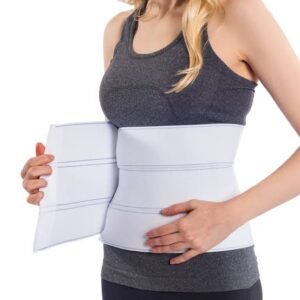
Must-have (if not supplied)
Adjustable abdominal binder
Supports your muscle repair.
View on Amazon →
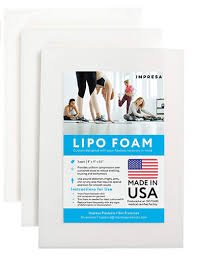
Under the binder
Lipo foam pads
Evens out pressure under the binder.
View on Amazon →
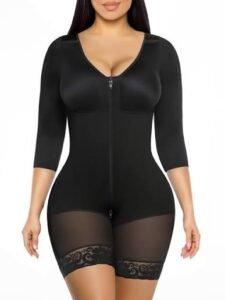
Stage 2
Faja compression garment
All-over support for stage two.
View on Amazon →
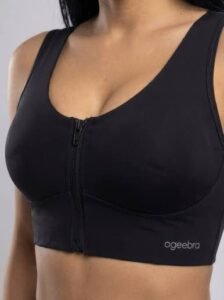
Must-have (if not supplied)
Surgical bra
Soft and front-closing.
View on Amazon →
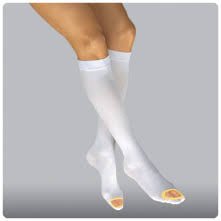
Clot plan
Compression stockings
Part of your clot plan.
View on Amazon →
Surgery day to week 2: little wins, big comfort
"Swollen first. Finished later."
Your job now is pleasantly boring: rest, take short walks, drink and eat. You'll be up walking within hours, slowly and bent at the waist, and the first 7–10 days are the hardest.5 Take short walks around the house every hour or two while you're awake, and keep a shake and your water bottle within reach.
A frank word about blood clots. Deep vein thrombosis (DVT) and pulmonary embolism (PE) are uncommon but serious, and combining procedures raises the risk. In a registry of 129,007 cosmetic patients, clots happened after 0.28% of combined body-and-breast surgeries, the highest of any group.19 Your best protection is walking early and often, staying hydrated, and following your surgeon's clot plan, which may include a blood-thinning shot and compression stockings.9,13 One-sided leg pain or swelling needs a call to your surgeon right away. Chest pain, fainting or shortness of breath means 911.
You'll look swollen long before you look finished. That's normal. Don't judge your result in week one, and don't force yourself upright or back into workouts to hit a timeline you saw online. Your surgeon's instructions on posture, showers, garments, drains and activity always win. If you take a GLP-1, ask your prescriber and surgeon when to restart it.
Weeks 2–6 and beyond: scars, swelling and the massage question
"The best scar product is the one you use every day."
This is the long game. Your tummy tuck scar runs low from hip to hip, and your breast scars sit around the areola and below. Scars keep fading and flattening for six months to two years.5
Silicone, once your incisions are fully closed. Ask your surgeon when to start. Silicone is one of the best-studied ways to help a scar flatten and soften.15 Sheets and gel worked about equally well in a split-scar trial,20 so pick the one you'll actually use: sheets are easy on the long, flat belly scar, and gel fits the curves around your breasts. Never put either on an open wound.
Sun and moisture. New scars darken in the sun, so cover them or use sunscreen once they're healed. A fragrance-free moisturizer, Vaseline or Aquaphor keeps healed skin around the scar comfortable. Use them only on skin your surgeon has cleared. Our incision and scar care guide walks through the full routine.
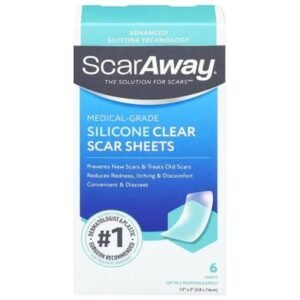
Once healed
Silicone scar sheets
Best for the belly scar.
View on Amazon →
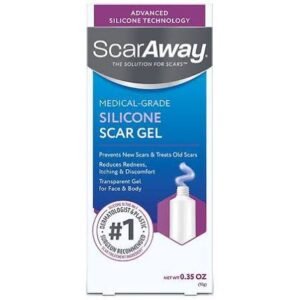
Once healed
Silicone scar gel
Best for the curves.
View on Amazon →
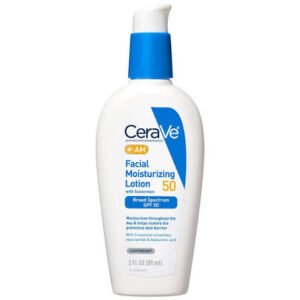
Once healed
Sunscreen
Keeps new scars from darkening.
View on Amazon →
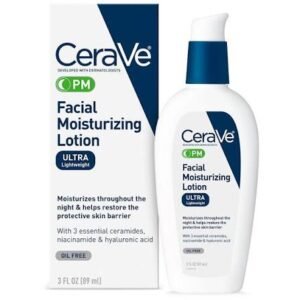
Once healed
Fragrance-free moisturizer
Soft, comfortable healed skin.
View on Amazon →

Once healed
Vaseline
Moisture for healed skin.
View on Amazon →
What about lymphatic massage? You'll hear a lot about it. Some people find gentle sessions comfortable, and small studies have shown short-term drops in swelling.21 But there's no solid proof it improves your final result. Here's a twist most guides miss: a tummy tuck reroutes your belly's drainage. Before surgery, the lower belly drained toward the groin in every patient. After surgery, 65% drained toward the armpits instead, and only 15% kept the old path.22 So "push everything down to the groin" videos can be wrong for you. Only after your surgeon says yes:
✓ Ask whether a trained lymphatic therapist should show you your direction.
✓ On healed, intact skin only, use a feather-light, slow, skin-stretching touch, not deep kneading.
✓ Never massage over healing incisions, drains, or red, painful or unexplained swollen areas.
✓ Stop if it hurts or the swelling gets worse. If you suspect a clot or infection, call your surgeon instead.
If your surgeon or therapist OKs a tool, a body massage roller makes that light, even stroke easier. For a visual on the basic technique, see the Cleveland Clinic guide to lymphatic drainage. It's general education, not your post-op map.
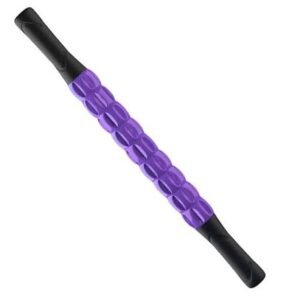
Mommy makeover recovery kit
Ready? Add the whole kit to your cart.
Every item above in one click, so you're set up at home before surgery day.
02
The basics
What a mommy makeover actually is

"Mommy makeover" isn't one operation. It's a name for a combination of procedures that restore the body after pregnancy and breastfeeding, and it's usually done as a single surgery.1,2 The two core pieces are:
1. A tummy tuck (abdominoplasty) for the belly.
2. A breast lift (mastopexy), often combined with breast implants (augmentation) for the breasts.
Some women add liposuction of the waist or flanks. Your surgeon builds the plan around your body, your goals and your safety.1,2
03
The belly
Skin out, muscles in: the internal corset
"Think of it as an internal corset."
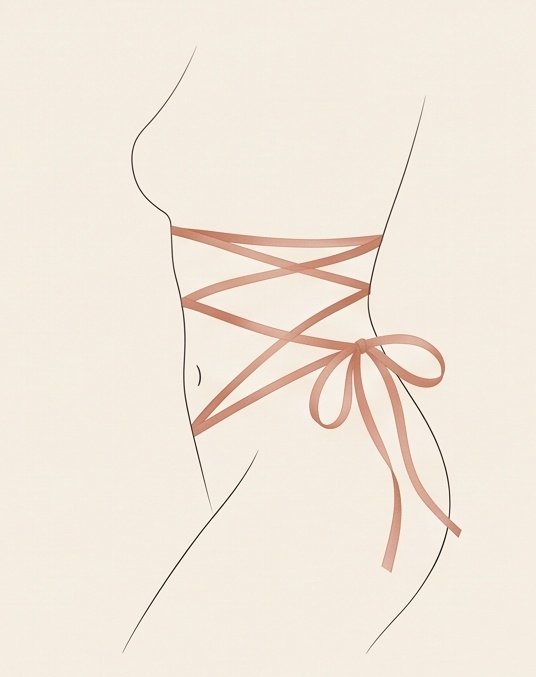
It removes the loose skin and fat of the lower belly, including the stretch-marked skin below the belly button, through an incision that runs low, from hip to hip, usually where underwear or a bikini will cover it.3
It tightens the muscle wall. During pregnancy, the two long "six-pack" muscles (the rectus muscles) are pushed apart. This is called diastasis recti. In one study that followed 300 first-time mothers, 60% had it at six weeks after birth, and a third still had it at one year.7 In a tummy tuck, your surgeon usually stitches the muscle edges back together down the middle.3 That's the internal corset: a firm, flat wall that holds your belly in from the inside.
It's about function too, not only looks. In a study of 214 women having a tummy tuck with muscle repair, back pain scores dropped significantly by six weeks and kept improving at six months, and urinary leakage scores improved too.8 Many women say they simply feel stronger: they stand taller, carry the groceries and get back to moving.
Figure 1
How common separated belly muscles are after pregnancy
Mid-pregnancy (week 21)7
33%
6 weeks after birth7
60%
6 months after birth7
45%
12 months after birth7
33%
Data: Sperstad 2016, 300 first-time mothers in Norway.7 Not everyone with diastasis needs surgery, and exercise and physical therapy help many women.
Want the deep dive? Read the tummy tuck recovery guide →
04
The breasts
Lifted, reshaped, restored

After pregnancy and breastfeeding, breasts often lose volume and sit lower on the chest.4 A breast lift fixes the shape:
✓ It raises the nipple and areola to a higher, more youthful position, and can make a stretched areola smaller.4
✓ It removes extra skin and tightens the tissue to reshape the breast into a rounder, perkier, more cone-like shape that sits higher on your chest.4
✓ A lift doesn't add much volume. If you've lost fullness, especially at the top of the breast, an implant can be added at the same time (augmentation-mastopexy).4
Your incisions depend on how much lift you need: around the areola, often down the lower breast, and sometimes along the crease underneath. Your surgeon will show you where.
More on breast recovery: the breast augmentation and lift guide →
05
Timing
Is now the right time?

You're likely a good candidate if you:1,2
✓ Are done having children. A future pregnancy can stretch the skin and muscles again, so surgeons usually advise waiting.3
✓ Have held a stable weight near your goal for a few months.16
✓ Are healthy, with conditions like diabetes or high blood pressure under control.2
✓ Don't smoke or vape nicotine. Nicotine slows healing and raises the risk of serious complications.2 Ask your surgeon how long to be nicotine-free before and after.
✓ Have finished breastfeeding. Many surgeons ask you to wait about 3–6 months after you stop.
✓ Have realistic expectations and a plan for help at home.1
The biggest choice you'll make is your surgeon. Choose a board-certified plastic surgeon who operates in an accredited facility.
06
Week by week
Your recovery, week by week

Your surgeon's instructions always come first. These are typical ranges.
Days 0–3
Up and walking within hours, slowly and bent at the waist.5 Binder, bra and stockings on. Drains in. Rest with your back up and knees bent, with an adult with you around the clock.
Week 1
The hardest week. You may not feel like yourself for 7–10 days.5 Short walks around the house every hour or two while awake. Drains often come out at a follow-up visit.5
Week 2
Standing straighter. Many women go back to a desk job after about two weeks. Someone else should be fully in charge of small children for at least the first two weeks.5
Weeks 2–3
Driving, once you're off narcotic pain medicine, your drains are out and you can twist and brake comfortably.5
Weeks 4–6
Still no heavy lifting, and that includes picking up your kids and laundry baskets.5 Keep your binder on as much as possible through week 6.
Week 6+
Strenuous exercise and core work usually wait until about six weeks, or until your surgeon clears you.5 Build back slowly.
Months 3–24
The slow reveal. Swelling fades over months, and scars soften and fade over 6 months to 2 years.5
07
Your village
The must-have that isn't on Amazon: help

You can't lift your kids for four to six weeks, and for the first two weeks you shouldn't be the one in charge of little ones at all.5 Set it up now:
✓ Night duty: who's with you for the first week?
✓ Kids: who handles school runs, bath time and bedtime for two weeks?
✓ Meals: cook and freeze a week of dinners, or start a meal train.
✓ The talk: tell older kids "Mom is healing": no jumping on you, gentle hugs from the side.
✓ No-bend home: move everyday things to counter height before surgery.
08
Save your money
What you can skip
✗ Waist trainers or store-bought shapewear instead of your surgeon's binder or garment.
✗ Underwire or push-up bras in the early weeks. Wait until your surgeon clears them.
✗ Heating pads or ice packs on your belly or breasts unless your surgeon says yes. Skin is often numb after surgery, so you might not feel a burn.
✗ Detox teas, "drainage" supplements and diuretics. They don't speed healing and can upset your fluid balance.
✗ Crunches and ab workouts until your surgeon clears you. Your internal corset needs time to heal.
✗ A big supplement haul without your surgeon's OK. Some supplements raise bleeding risk.
✗ Gadgets you'll forget in a drawer. The best scar product is the one you'll use every day.
09
Print it
Your mommy makeover checklist
Before surgery
☐ Resistance bands and a mat (3–6 months out)
☐ Protein shakes
☐ Juven, multivitamin and zinc (surgeon-approved)
☐ Wedge pillow and grabber
☐ Pill organizer and medication log
☐ Big water bottle and electrolyte packets
☐ Miralax or fiber (start before surgery)
☐ Dressing kit, ABD pads, gauze, tape
☐ Drain holder
☐ Binder and foam pads (if not supplied)
☐ Front-closing surgical bra × 2
☐ Compression stockings
Line up
☐ A night-time helper for week 1
☐ Childcare for at least 2 weeks
☐ Frozen meals or a meal train
☐ About 2 weeks off work
Ask your surgeon
☐ Your clot-prevention plan
☐ How long to stay bent and wear the binder
☐ Drain care and when you can shower
☐ When to restart a GLP-1, if you take one
☐ When to start silicone and massage
Once you're healed
☐ Silicone sheets or gel
☐ Sunscreen on new scars
☐ Fragrance-free moisturizer or Vaseline
☐ Faja (stage 2)
☐ Massage roller (if cleared)
☐ Exercise and core work
10
Good to know
What's not normal, and when to call
A mommy makeover is a big operation, and it's honest to say so. In a database of more than 25,000 tummy tucks, about 4 in 100 people had a major complication, higher than most other cosmetic surgeries. Adding other procedures raised that risk: a tummy tuck combined with a breast procedure had a 4.3% major complication rate, compared with 3.1% for a tummy tuck alone. The most common serious problems were bleeding under the skin (hematoma) and blood clots.6
That's why your choice of surgeon matters more than anything you buy. Ask how they'll lower your clot risk, including whether you need a blood-thinning shot.9
Figure 2
Major complications within 30 days
Tummy tuck alone6
3.1%
Tummy tuck + breast procedure6
4.3%
Tummy tuck + liposuction + breast procedure6
4.6%
Data: Winocour 2015, 25,478 tummy tucks in a surgeon insurance database.6 Your own risk depends on your health, your BMI and how long surgery takes.
Call your surgeon right away
⚠ Pain, swelling or warmth in one calf or leg
⚠ One breast, or one side of your belly, suddenly getting bigger, tighter or more painful
⚠ Fever, spreading redness, pus or a bad smell from an incision
⚠ Skin at an incision or a nipple turning dark, dusky or black
⚠ Bleeding that keeps soaking through your dressings, or drain fluid that suddenly turns bright red
Call 911
⚠ Sudden shortness of breath or trouble breathing
⚠ Chest pain, a racing heartbeat, fainting, or coughing up blood
If you're not sure, call. That's what your surgeon wants.
Common questions
What should I buy before a mommy makeover?
Protein shakes, a wedge pillow, a grabber, a stool softener, dressing and drain supplies, a binder and front-closing surgical bra (if your surgeon doesn't supply them) and compression stockings. They're all in the one-click recovery kit. Silicone comes later.
How long is mommy makeover recovery?
Plan on about two weeks off work, no heavy lifting (including your kids) for four to six weeks, and no strenuous exercise until about six weeks. Swelling and scars keep improving for months.5
Why do I have to stay bent over after a tummy tuck?
Bending slightly at the waist takes tension off your fresh incision and muscle repair. Your surgeon will tell you when to start standing straight, often over the first week or two.
Can I have a mommy makeover while on a GLP-1?
Many people do, but tell your surgeon and anesthesia team about every dose well ahead of time, because these drugs slow how fast your stomach empties. Aim for a stable weight before surgery.16
Is a mommy makeover safe?
For healthy patients with a board-certified plastic surgeon, serious complications are uncommon, but combining procedures adds some risk.6,19 Walk early, follow your clot plan and know the red flags.

You've taken care of everyone else. This one's for you.
Everything on this page is free, and it always will be. Read it, share it with your person, and buy only what you need.
Get the Mommy Makeover Recovery Kit →References
1. American Society of Plastic Surgeons. Mommy makeover. Accessed October 11, 2026.
2. The Aesthetic Society. Mommy makeover. Accessed October 11, 2026.
3. American Society of Plastic Surgeons. Tummy tuck. Accessed October 11, 2026.
4. American Society of Plastic Surgeons. Breast lift. Accessed October 11, 2026.
5. The Aesthetic Society. Mommy makeover aftercare and recovery. Accessed October 11, 2026.
11. Rothman JP, et al. Dan Med J. 2014;61(11):A4941.
12. American Society of Plastic Surgeons. Mommy makeover recovery. Accessed October 11, 2026.
16. van der Beek ESJ, van der Molen AM, van Ramshorst B. Complications after body contouring surgery in post-bariatric patients: the importance of a stable weight close to normal. Obes Facts. 2011;4(1):61-66.
17. Wilding JPH, Batterham RL, Calanna S, et al. Once-weekly semaglutide in adults with overweight or obesity. N Engl J Med. 2021;384(11):989-1002.
18. Bruno A, D'Antimi A. Early protein supplementation enhances wound healing and reduces complications following abdominoplasty: a controlled study in non-bariatric patients. Aesthetic Plast Surg. 2026;50(5):2145-2159. PMID 42393363.
19. Winocour J, Gupta V, Kaoutzanis C, et al. Venous thromboembolism in the cosmetic patient: analysis of 129,007 patients. Aesthet Surg J. 2017;37(3):337-349.
20. Lin YS, Ting PS, Hsu KC. Comparison of silicone sheets and silicone gel in the prevention of hypertrophic scars in post-cesarean section incisions: a split-scar randomized controlled trial. Medicine (Baltimore). 2018;97(32):e11767.
21. Masson IFB, et al. Manual lymphatic drainage and therapeutic ultrasound in liposuction and lipoabdominoplasty post-operative period. Indian J Plast Surg. 2014;47(1):70-76. PMID 24987208.
22. Bassalobre M, Liebano RE, da Silva MP, Castiglioni MLV, Sadala AY, Ferreira LM, Nahas FX. Changes in the pattern of superficial lymphatic drainage of the abdomen after abdominoplasty. Plast Reconstr Surg. 2022;149(6):1106e-1113e. PMID 35383695.
Reviewed by the Recovery Blueprint MD team. Last updated October 2026.
This guide is general education, not medical advice. Every patient and procedure is different, and your surgeon's own instructions should always take priority. If you have sudden shortness of breath, chest pain or a racing heartbeat, call 911. For fever, swelling in one leg, bleeding that keeps soaking through your dressings, spreading redness or a bad smell from an incision, contact your surgeon's office promptly. As an Amazon Associate, Recovery Blueprint MD earns from qualifying purchases.